

Where to Host a Large Client Dinner in Bergen County

Key Takeaways
- A large client dinner stops being a conversation and becomes an event somewhere around twelve people. Past that, the room, the seating chart, and the menu format matter more than anything said at the table.
- Private dining is the default above twenty. Not for privacy alone — a dedicated room is the only way to control acoustics, service pacing, and who sits where.
- Book six to eight weeks ahead, longer for December. Have your headcount, format, and budget ready before you call.
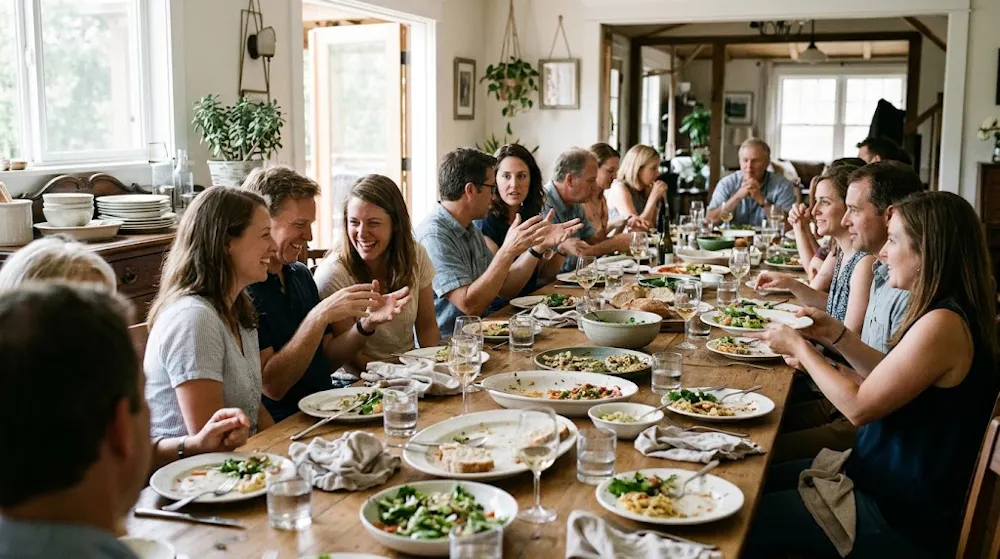
What Changes Above Twelve
A dinner for four runs on conversation. You pick a good table, order well, and the evening succeeds or fails on what gets said.
A dinner for twenty runs on structure. Nobody talks to everyone. The conversation splits into clusters of three or four, determined almost entirely by the seating chart. Service takes longer. Courses have to be timed rather than improvised.
The host's job changes with it — less about being charming across a table, more about having built an evening where the right people ended up next to each other.
Where the thresholds sit
Up to 8. One conversation, one table. A reserved section works; a private room is unnecessary. Our business dinner guide covers this size.
10 to 16. A single long table, but the conversation has already split. Seating starts to matter. A reserved area or a small private room.
20 to 40. A private room is the right call. Multiple conversations, timed service, probably a few words from someone.
Over 40. Reception format usually beats a seated dinner, and a microphone becomes necessary for anything said.
The Room
Three requirements, in order of importance.
Acoustics. A room where people have to raise their voices produces a bad evening for every guest at the far end of the table. This matters more than décor and more than the menu.
Genuine separation. A private room with a door beats a sectioned-off corner of a dining room. Business conversations happen at these dinners, and clients notice whether they're being overheard.
A table shape that works. One long table seats more but isolates the ends. Two round tables of ten produce better conversation but split the group. Worth deciding deliberately rather than accepting whatever arrives.
The spaces at Sofia
Sofia has three private rooms at 36 Engle Street.
The Garden Room is the primary event space, with a retractable roof that opens in warm weather and closes and heats when it doesn't. For a client dinner of twenty to forty this is usually the answer — the height and light give the room a sense of occasion that an interior function space doesn't have. Our outdoor dining piece covers how it works seasonally.
The Piazza is the heated private backyard patio, suited to a smaller group from late spring through early fall.
The cigar lounge downstairs is ventilated and speakeasy-style, one of the few indoor smoking rooms in New Jersey. Rarely the dinner itself, frequently the second act — our lounge guide covers it, and for the right client it's a genuinely rare thing to be able to offer.
The Seating Chart
The single most underrated decision in a large client dinner.
At twenty people, nobody speaks to more than five or six others all evening. Who those five or six are is entirely within your control, and leaving it to chance wastes the budget.
Split your own team. The most common mistake is colleagues clustering together. Spread them deliberately so every cluster of clients has someone from your side in it.
Put your most senior person next to theirs. Obvious, frequently forgotten in the scramble at the door.
Think about the ends. Long tables isolate whoever sits at the far end. Put confident talkers there, not the quietest person on your team.
Separate people who already know each other well. They'll talk to each other all night otherwise, and the dinner achieves nothing new.
Write it down and give it to the venue. Place cards remove the awkward shuffle and let you control the outcome. Any serious private room will set them.
The Menu Format
Three options, and the choice affects the evening more than the dishes do.
Prix fixe is the right default. A set number of courses with two or three options at each. The kitchen preps ahead, service arrives together, and the cost is known before anyone sits down. Critically, synchronized courses mean nobody is eating while their neighbour watches.
Family style generates more conversation and suits a group that already knows each other. Less formal, more movement at the table.
À la carte sounds generous and performs badly above twelve. Courses arrive staggered, service slows, and the check takes an age.
Collect dietary restrictions before you call rather than after. Sofia carries gluten-free, whole grain, red lentil, and zucchini pasta and marks gluten-free desserts. Our group reservation checklist covers everything a venue will ask.
The Wine
At twenty people, wine stops being a choice and becomes a program.
Pick two or three bottles and have them poured rather than passing a list around. A white and two reds covers a room.
Tell the venue your budget per bottle and let them recommend within it — our wine list guide covers how to ask without deliberating.
Open with something sparkling if the dinner marks anything. It gives the room a start.
Sofia's list runs deep on the Italian side — Super Tuscans, Barolo, Brunello, Amarone — and our pairing guide covers what works against the dry-aged beef.
If Someone Is Speaking
Many large client dinners include a few words — a welcome, a thank-you, occasionally a short presentation.
Keep it to two minutes. Twenty people at a dinner have a shorter attention span than twenty people in a conference room.
Do it between courses, after mains are cleared and before dessert. Everyone has eaten, plates are gone, nobody is being served through it.
Tell the venue in advance. A kitchen that knows will hold dessert rather than sending it out mid-sentence.
Ask about AV early if there's a presentation. Not every private room is set up for it, and finding out on the day is too late.
Booking
Six to eight weeks for a private room. Longer for December, when private spaces compete with holiday party season.
Midweek is better. Tuesday through Thursday means a calmer building, more attentive service, and easier availability.
What to have ready
- Headcount, and how firm it is
- Date, with a backup
- Whether you need a private room
- Per-person budget, or a total
- Dietary restrictions
- Whether anyone is speaking, and when
- AV requirements
- Your seating chart, or when you'll send it
The Details That Decide It
Arrive twenty minutes early. Check the room, confirm the seating, settle the bill arrangement, and be standing when the first client walks in.
The bill never reaches the table. Tell the captain on arrival that it comes to you and only you.
Valet matters at this size. Twenty people arriving within fifteen minutes in downtown Englewood is a parking problem. All-day valet removes it.
Give a soft end. Clients with commutes should be able to leave at nine-thirty without explaining themselves.
Plan the second act for whoever stays. Half the room will leave after dessert. The other half will want somewhere to go, and having an answer ready is the difference between an evening that ends and one that continues.
Questions
How many people make a client dinner a private dining event?
Around twelve. Below that, a reserved table works and the group holds one conversation. Above twenty, a private room becomes the right call, since acoustics, service pacing, and seating all need controlling.
What menu format works best for a large client dinner?
A prix fixe with two or three options per course. Courses arrive together, the kitchen preps in advance, and the cost is known before the dinner. À la carte ordering performs poorly above twelve people, since courses arrive staggered and service slows.
Does seating matter at a client dinner?
Considerably. At twenty people nobody speaks to more than five or six others all evening, and the seating chart determines who those are. Splitting your own team across the table so every cluster of clients has a host nearby is the most important single decision.
How far in advance should you book a large client dinner?
Six to eight weeks for a private room, and longer for December when private spaces compete with holiday bookings. Midweek dates are easier to secure and generally deliver better service.
Should there be speeches at a client dinner?
If anything is said, keep it to two minutes and deliver it after main courses are cleared and before dessert. Tell the venue in advance so dessert is held rather than served mid-speech.
Where can you host a client dinner for 20 in Bergen County?
Sofia, a fine dining Italian steakhouse at 36 Engle Street in Englewood, offers private spaces including a retractable-roof Garden Room and a heated patio, with all-day valet and a downstairs cigar lounge for continuing the evening.
About Sofia Englewood
Sofia is a fine dining Italian steakhouse at 36 Engle Street in downtown Englewood, NJ, recognized by NJ Digest for timeless elegance paired with modern culinary excellence. Three private spaces — the retractable-roof Garden Room, the heated Piazza patio, and a downstairs cigar lounge — host corporate dinners alongside the main dining room, with wood-fired USDA Prime dry-aged steaks, a deep Italian wine list, and all-day valet.
For client dinner bookings and private events, call (201) 541-8530. Full menus and hours and location are on the site.