

The Vegetable Course Nobody Orders Properly

Key Takeaways
- Vegetable sides at a steakhouse are usually ordered on autopilot and rarely considered. The column deserves closer reading than it gets.
- Vegetable-forward cooking is spreading into classic steakhouses, with menu analysts advising kitchens to start where vegetables do the heavy lifting.
- Sofia's seven sides run from charred brussels sprouts and broccolini to heirloom cauliflower, seasonal mushrooms, and shishito peppers with chickpea hummus.
Ordered Last, Considered Least
The sides column gets a few seconds of attention at most tables. Someone says "should we get a vegetable," somebody names one, and the conversation moves on.
That's a lot of menu going unread. Seven dishes at Sofia, most of them cooked with the same attention as anything else leaving the kitchen, and they're chosen faster than the wine.
The industry has noticed the gap. Chef Services Group's 2026 menu analysis observed vegetable-forward dishes appearing at classic steakhouses and breweries, advising operators whose menus feel meat-heavy to start with dishes where the vegetables do the heavy lifting.
What Fire Does to a Vegetable
The reason a steakhouse can be good at vegetables is the same reason it's good at beef.
High, direct heat caramelizes sugars on the surface before the interior turns to mush. Brussels sprouts go from a vegetable people apologize for to something crisp-edged and nutty. Cauliflower develops brown, almost meaty faces. Broccolini chars at the tips and stays green in the stalk.
The wood-burning oven that finishes the dry-aged steaks and bakes the pizzas is available to the vegetable station too. Same fire, different job.
Vegetables cooked gently steam. Vegetables cooked hard transform.
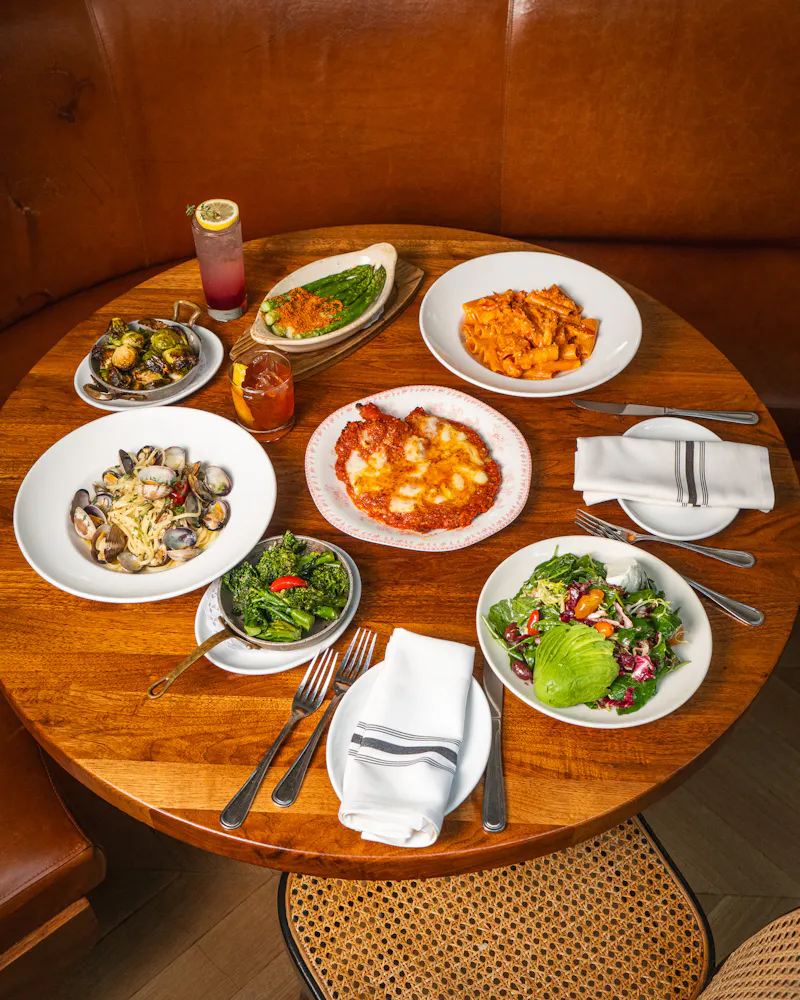
Reading the Seven
Charred Brussels Sprouts. The dish that converted a generation. Hard heat, crisp outer leaves, bitterness turning sweet at the edges.
Broccolini. Sweeter and more tender than broccoli, with long stalks that char at the tips. Handles garlic and chili well — the Italian approach to heat shows up here.
Seasonal Mushrooms. The most savory thing in the column. Mushrooms bring genuine umami depth, which is why they work beside beef rather than merely alongside it.
Asparagus and Parmigiano. A classic pairing with nothing to hide behind. Salt and nuttiness from the cheese, grassy sweetness from the asparagus.
Heirloom Cauliflower. Heirloom varieties bring color and denser texture than standard white cauliflower, and cauliflower takes to fire better than almost any vegetable — it browns rather than wilting.
Sautéed Spinach. The quiet one. Simple, and useful precisely because it doesn't compete with a rich main.
Shishito Peppers with Chickpea Hummus. The outlier, and the most interesting order in the column. Blistered shishitos are mild with an occasional hot one, and pairing them with hummus turns a side into something closer to a starter.
How to Order Them Properly
Two or three for the table, not one each
Sides are shared by default. Four people ordering four sides is too much food and too little variety.
Build contrast
Order across textures and weights rather than three green things. Something charred, something creamy, something savory. Brussels sprouts, mushrooms, and the shishitos with hummus is a better table than three leafy sides.
Match them to the main
A rich main wants something bright and acidic beside it. A lighter main can carry heavier sides. Ordering whole fish changes the right side order from a Porterhouse.
Order them as a course
The most underused move: order two or three sides at the start, as a vegetable course, before the mains arrive. It changes the rhythm of the meal and gets vegetables genuine attention rather than crowded plate space.
The Vegetarian Case, Honestly
Worth being direct: Sofia's menu has no vegetarian entrée, and a steakhouse is not designed around vegetarian dining.
What the sides column does offer is a workable path. Two or three sides, plus a starter like eggplant rollatini or mozzarella di bufala, plus one of the meat-free pastas, composes a real meal from smaller plates. Our guide to ordering without steak walks through the full approach.
Mentioning it at booking helps. A kitchen with notice performs better than one told at the table.
Questions
What vegetable sides does Sofia serve?
Sofia in Englewood, NJ offers seven sides: charred brussels sprouts, broccolini, seasonal mushrooms, asparagus with parmigiano, heirloom cauliflower, sautéed spinach, and shishito peppers with chickpea hummus.
How many sides should you order at a steakhouse?
Two or three shared sides generally suits a table of four. Sides are meant to be shared rather than ordered individually, and building contrast across texture and weight works better than choosing three similar vegetables.
Why are vegetables better at a steakhouse?
Steakhouses cook over high direct heat, which caramelizes the surface of vegetables and develops flavor rather than steaming them soft. The same wood oven or grill used for beef gives vegetables char and depth a conventional oven cannot.
Can vegetarians eat at a steakhouse?
It takes some construction. Sofia has no vegetarian entrée, but a meal can be built from vegetable sides, starters such as eggplant rollatini and mozzarella di bufala, salads, and meat-free pastas. Mentioning the restriction when booking helps the kitchen prepare.
What are shishito peppers?
Shishito peppers are small, mild Japanese peppers usually blistered over high heat, with roughly one in ten carrying noticeable heat. Sofia serves them with chickpea hummus as a side.
About Sofia Englewood
Sofia is a fine dining Italian steakhouse in downtown Englewood, NJ, recognized by NJ Digest for timeless elegance paired with modern culinary excellence. The kitchen's wood-burning oven cooks USDA Prime dry-aged steaks, four pizzas, and vegetables alongside house-made pasta, wild-caught whole fish, and a raw bar with caviar service.
For reservations and private events, call (201) 541-8530. Full menus and hours and location are on the site.